
Uncategorized

Best digital marketing specialist in thrissur - blog

The Biggest Portfolio Website Mistakes That Can Cost You Clients

Your portfolio website has the power to attract opportunities — but it can also push potential clients away if certain mistakes are ignored. Many talented professionals lose valuable projects simply because their online presence does not represent their actual skills properly. A strong portfolio should create confidence, clarity, and engagement. Unfortunately, common design and content mistakes often create confusion instead. Understanding these mistakes can help you improve your website and create a better experience for visitors. Using Outdated Design Styles Design trends evolve constantly. A website that looked modern five years ago may appear outdated today. Old fonts, cluttered layouts, poor color combinations, and low-quality visuals can make visitors question your professionalism. Your portfolio should feel clean, modern, and visually balanced. Simplicity often creates a stronger impression than overcomplicated animations or excessive elements. Updating your design regularly also shows that you stay current with industry standards and trends. Lack of Clear Contact Information One of the most damaging mistakes is making it difficult for people to contact you. If visitors cannot quickly find your email, contact form, or social links, they may leave and hire someone else instead. Your contact section should be visible and easy to access from every page. Adding a simple call-to-action like “Let’s Work Together” can encourage more inquiries. Remember, even interested clients may not take extra steps to search for your contact details. Ignoring Mobile Optimization Today, a large percentage of website traffic comes from mobile devices. If your portfolio does not work smoothly on smartphones or tablets, visitors may lose interest immediately. Text should be readable, images should load properly, and navigation should remain simple across all screen sizes. Mobile-friendly websites also perform better in Google rankings, which improves your SEO visibility. Writing Weak or Generic Content Many portfolios use repetitive phrases like: While these words sound professional, they do not explain real value. Visitors want to understand what makes you different. Instead of generic claims, focus on: Authentic and clear writing always creates stronger engagement. Conclusion Even highly talented professionals can lose opportunities because of avoidable portfolio mistakes. A modern design, clear messaging, strong project presentation, and mobile optimization all play a major role in creating trust online.

The Biggest Portfolio Website Mistakes That Can Cost You Clients Read More »
Best digital marketing specialist in thrissur - blog

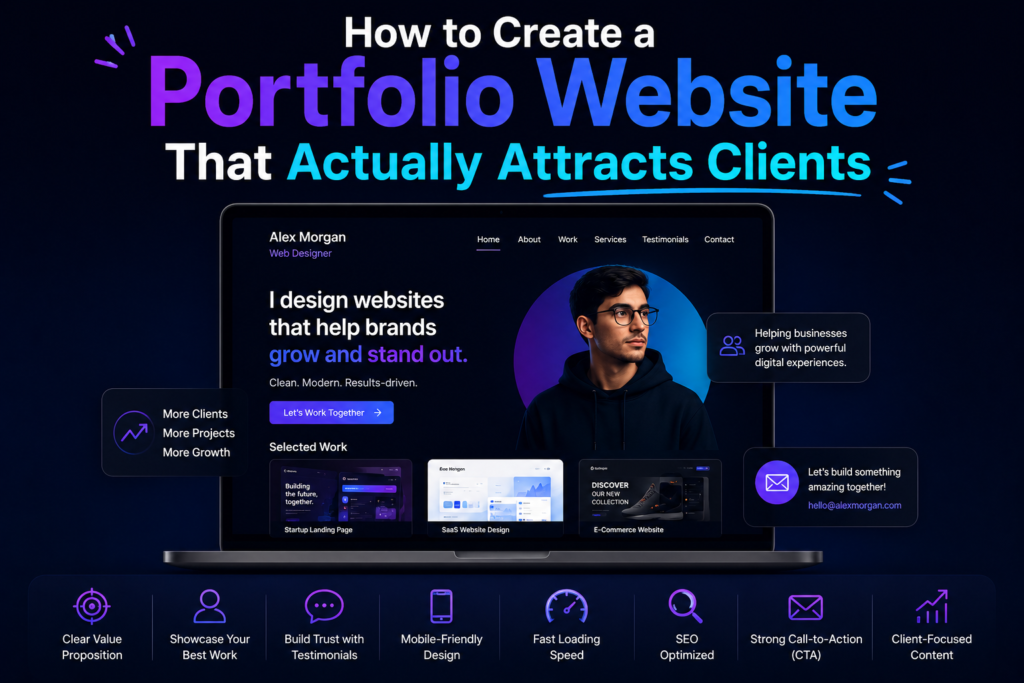
How to Create a Portfolio Website That Actually Attracts Clients

Many people build portfolio websites, but only a few truly convert visitors into clients. The difference usually comes down to strategy, presentation, and user experience. A good portfolio is not only about showing beautiful work. It should guide visitors, communicate value clearly, and make people feel confident enough to contact you. If your website looks confusing, outdated, or incomplete, potential clients may leave within seconds. Creating a client-focused portfolio website can significantly increase inquiries, collaborations, and freelance opportunities. Start with a Clear Personal Introduction The homepage is often the first thing visitors see. That means your introduction should immediately explain who you are and what you do. Instead of writing generic lines like “Welcome to my website,” focus on clarity and personality. For example: “I help businesses create modern websites that improve user experience and increase conversions.” This type of introduction feels direct, professional, and client-focused. It tells visitors exactly how you can help them. Adding a professional photo and a short personal story can also make your portfolio feel more human and relatable. Showcase Quality Over Quantity One common mistake is adding too many projects. Visitors do not want to scroll endlessly through average work. It is much better to display fewer projects with strong explanations and visuals. Each project should include: This approach helps clients understand your thinking process, not just the final design or product. Make Navigation Simple and Clean A clean website structure improves user experience and professionalism. Visitors should easily find: Complicated navigation often frustrates users and increases bounce rates. Minimal and organized layouts usually perform better because they feel modern and easier to explore. Fast loading speed and mobile responsiveness are equally important since many visitors browse from smartphones. Add Testimonials and Social Proof People trust recommendations. Client reviews and testimonials make your portfolio more believable and trustworthy. Even short feedback from previous clients can improve conversion rates. Testimonials show that real people have worked with you and appreciated your services. If you are just starting, you can also include feedback from internships, collaborations, or academic projects. Conclusion A successful portfolio website combines creativity with strategy. It should not only look good but also communicate trust, professionalism, and value clearly

How to Create a Portfolio Website That Actually Attracts Clients Read More »

Best digital marketing specialist in thrissur - blog

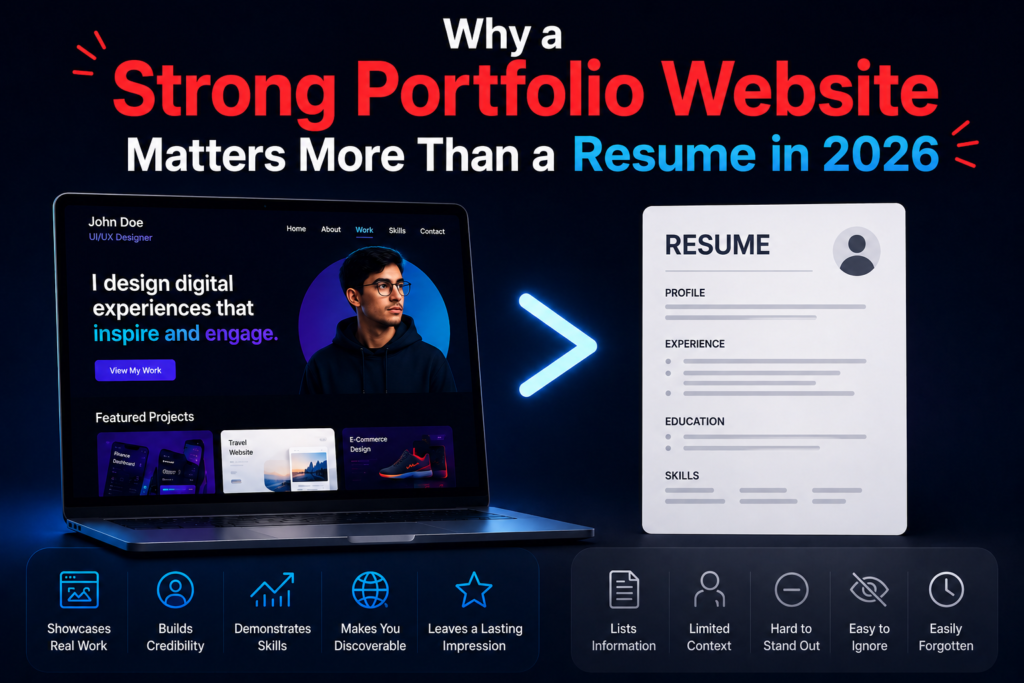
Why a Strong Portfolio Website Matters More Than a Resume in 2026

In today’s digital world, first impressions are rarely made in person. Most clients, recruiters, and collaborators search online before making a decision. That’s exactly why having a strong portfolio website is no longer optional — it has become one of the most powerful tools for personal branding and professional growth. A resume tells people what you have done, but a portfolio website shows them how you think, create, and solve problems. Whether you are a designer, developer, freelancer, photographer, or digital creator, your portfolio becomes your online identity. It speaks for you even when you are offline. Your Portfolio Builds Instant Trust People trust what they can see. A clean and professional portfolio website immediately creates confidence in your skills and professionalism. Visitors feel more comfortable contacting someone who presents their work clearly and confidently. Instead of sending multiple files or explaining your experience repeatedly, your portfolio organizes everything in one place. Clients can quickly explore your projects, understand your style, and decide whether you are the right fit for their needs. A portfolio also makes you appear more serious about your work. Even a simple but well-structured website can make a huge difference in how people perceive your expertise. Showcasing Real Work Creates Better Opportunities One of the biggest advantages of a portfolio website is the ability to showcase real projects. Anyone can claim to have skills, but displaying actual work builds credibility. For example, a web developer can showcase responsive websites, a graphic designer can display branding projects, and a content writer can present published articles. Real examples create stronger emotional connections because visitors can visualize results instead of just reading descriptions. When people see quality work, they are more likely to trust your abilities and contact you for projects, collaborations, or hiring opportunities. SEO Helps Clients Find You Organically A portfolio website is not just about design — it also helps people discover you through search engines. With proper SEO optimization, your website can appear in Google searches when potential clients look for services in your niche. For example, if your website contains keywords like “freelance web designer,” “creative portfolio,” or “UI/UX designer portfolio,” search engines can rank your content for those terms. This creates free long-term traffic and increases your visibility online. Adding blogs, project case studies, and service pages also improves your SEO performance over time. Conclusion A portfolio website is more than a digital gallery. It is your personal brand, marketing tool, and professional identity combined into one platform. In a competitive online world, having a strong portfolio can help you stand out, build trust, and attract better opportunities.

Why a Strong Portfolio Website Matters More Than a Resume in 2026 Read More »