
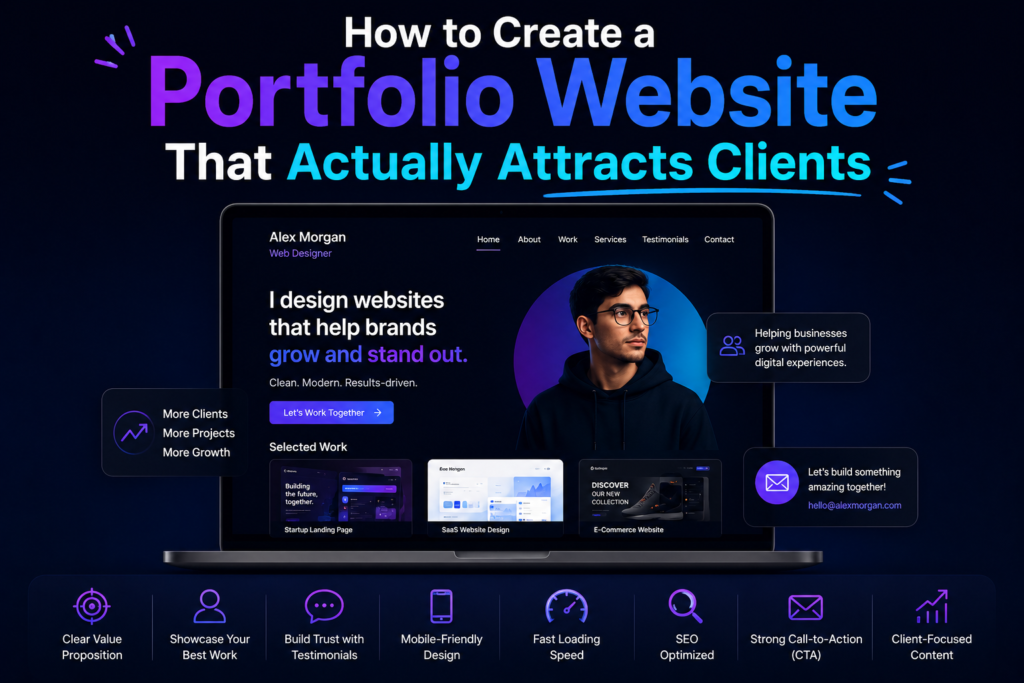
Many people build portfolio websites, but only a few truly convert visitors into clients. The difference usually comes down to strategy, presentation, and user experience.
A good portfolio is not only about showing beautiful work. It should guide visitors, communicate value clearly, and make people feel confident enough to contact you. If your website looks confusing, outdated, or incomplete, potential clients may leave within seconds.
Creating a client-focused portfolio website can significantly increase inquiries, collaborations, and freelance opportunities.
Start with a Clear Personal Introduction
The homepage is often the first thing visitors see. That means your introduction should immediately explain who you are and what you do.
Instead of writing generic lines like “Welcome to my website,” focus on clarity and personality. For example:
“I help businesses create modern websites that improve user experience and increase conversions.”
This type of introduction feels direct, professional, and client-focused. It tells visitors exactly how you can help them.
Adding a professional photo and a short personal story can also make your portfolio feel more human and relatable.
Showcase Quality Over Quantity
One common mistake is adding too many projects. Visitors do not want to scroll endlessly through average work. It is much better to display fewer projects with strong explanations and visuals.
Each project should include:
- The goal of the project
- Your role and process
- Challenges you solved
- Final outcome or results
This approach helps clients understand your thinking process, not just the final design or product.
Make Navigation Simple and Clean
A clean website structure improves user experience and professionalism. Visitors should easily find:
- About page
- Portfolio/projects
- Services
- Testimonials
- Contact page
Complicated navigation often frustrates users and increases bounce rates. Minimal and organized layouts usually perform better because they feel modern and easier to explore.
Fast loading speed and mobile responsiveness are equally important since many visitors browse from smartphones.
Add Testimonials and Social Proof
People trust recommendations. Client reviews and testimonials make your portfolio more believable and trustworthy.
Even short feedback from previous clients can improve conversion rates. Testimonials show that real people have worked with you and appreciated your services.
If you are just starting, you can also include feedback from internships, collaborations, or academic projects.
Conclusion
A successful portfolio website combines creativity with strategy. It should not only look good but also communicate trust, professionalism, and value clearly